
Project Overview
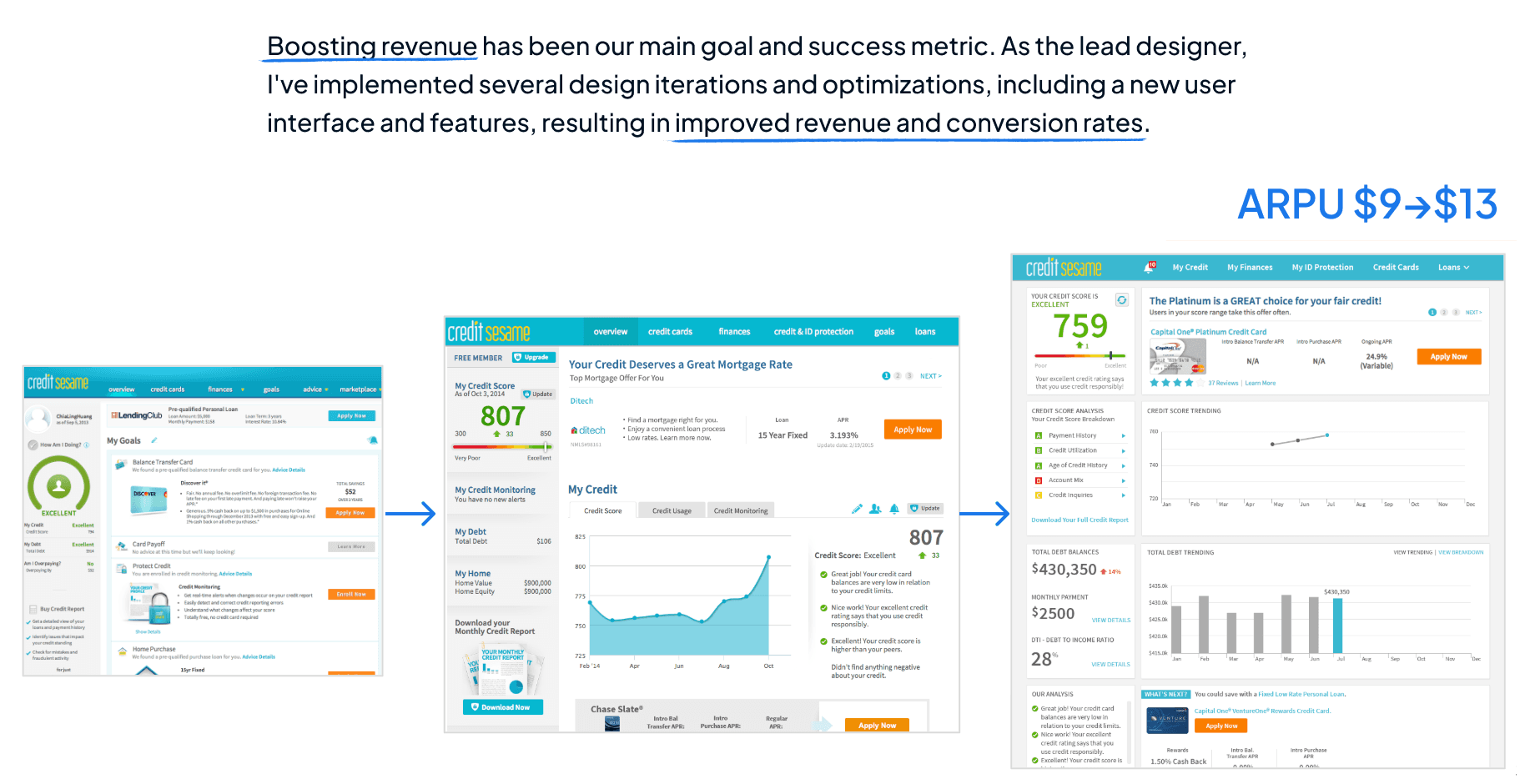
The goal of this project was to optimize the most valuable feature in Credit Sesame’s product, and help the company increase revenue. Most of users sign up for Credit Sesame to receive free credit scores and analysis, as well as financial recommendations for improving their credit scores. Since I was the only in-house designer back in the day, I also worked with the product manager to conduct user studies and retrieve the tracking data.
My Role: Lead UX Designer
Timeline: 1 month
Cross-functional Teams: PM, Engineering
Business Impact
Revenue Growth
Drove 20% ARPU Growth
Personalized product recommendations directly increased Average Revenue Per User by 20%, demonstrating the measurable value of user-centered design in driving revenue optimization.
User Engagement
By addressing core user friction points and introducing targeted feature improvements, we significantly increased monthly user retention rates and overall customer satisfaction metrics.
Identify User Problems and Opportunities
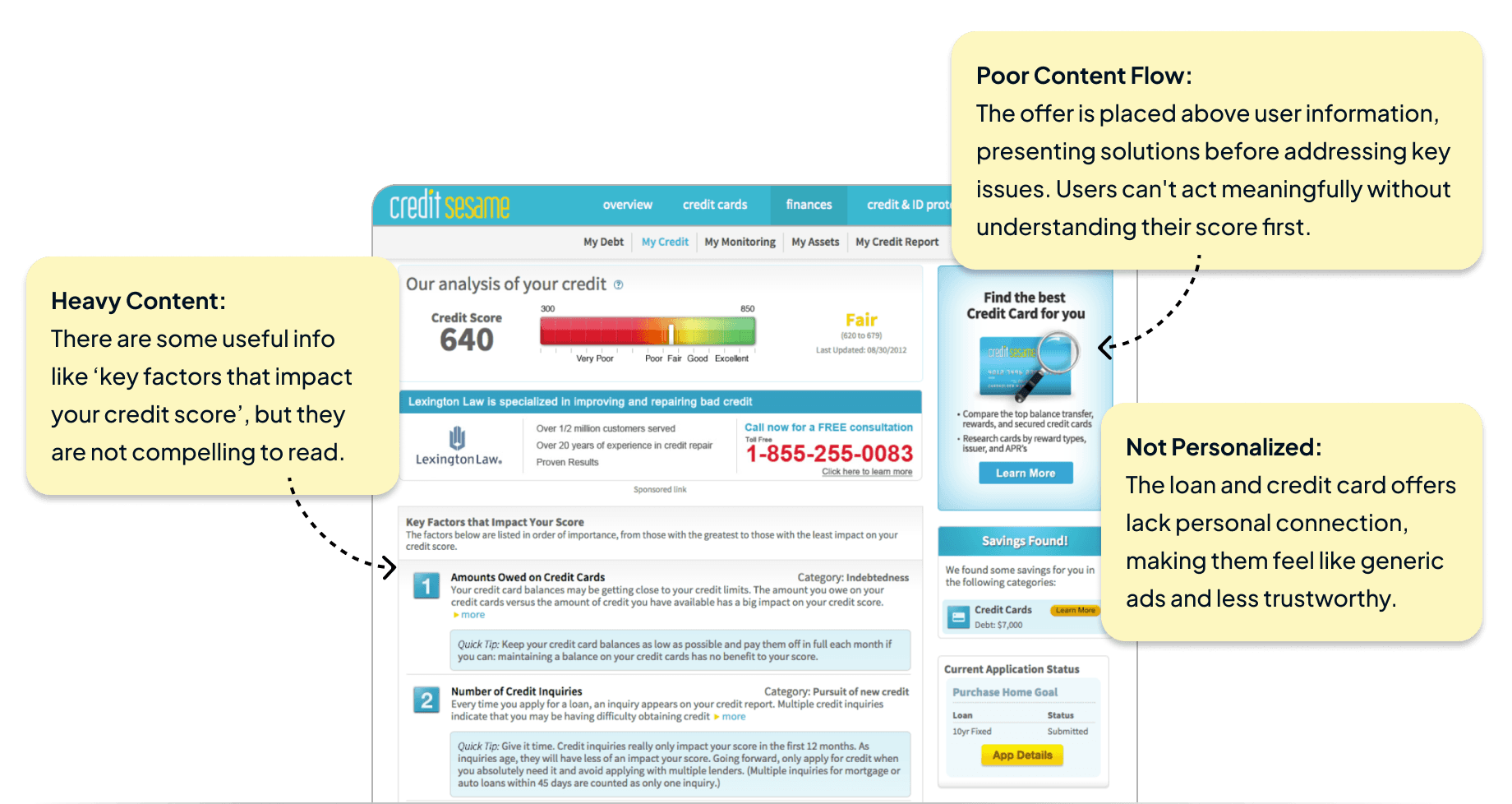
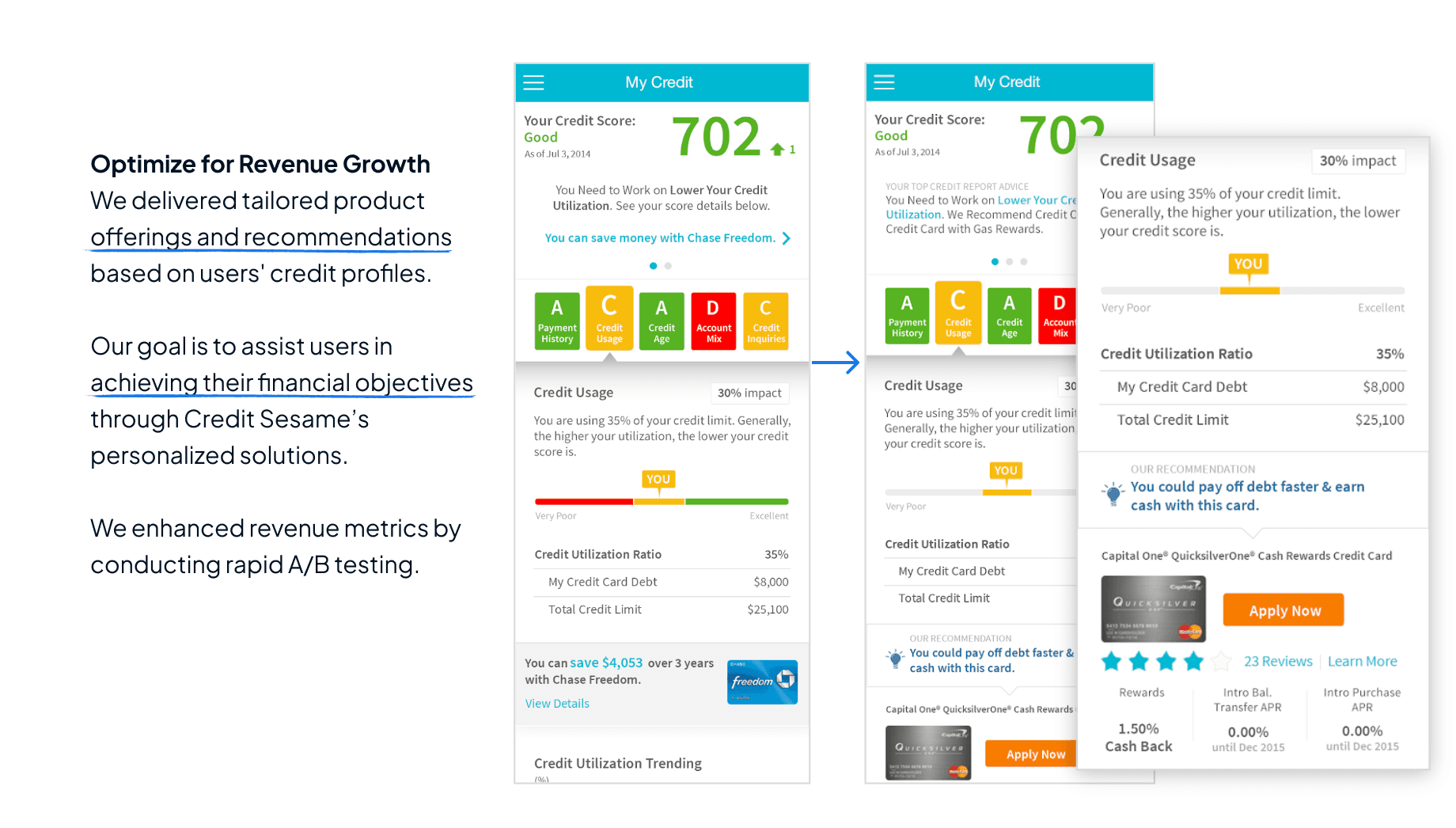
Before I joined Credit Sesame, the feature was presented poorly with overwhelming content and user interface. Although the page contained valuable information, it was very hard to digest for the users. The offer that drives company’s revenue was very generic and had no connections with user’s personal data.
A/B Testing and Iterative Design for Click-through Rate
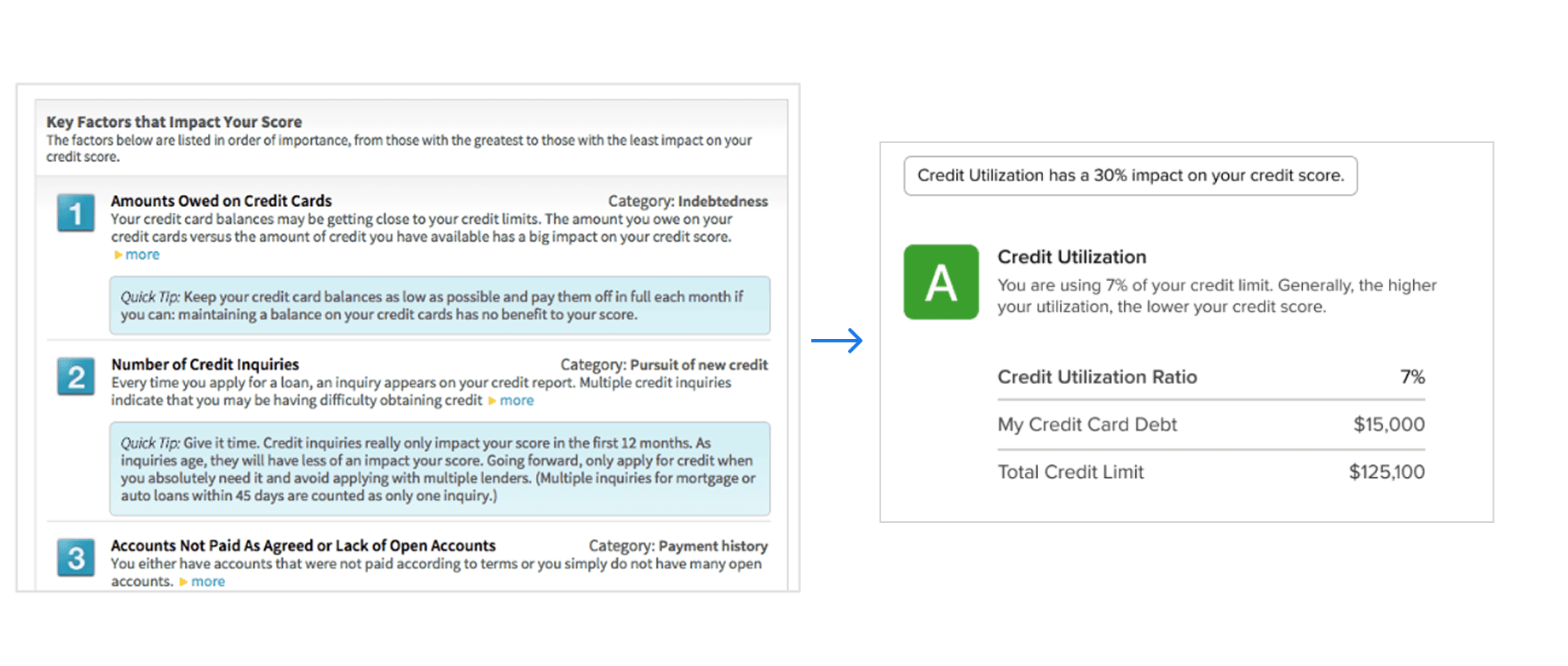
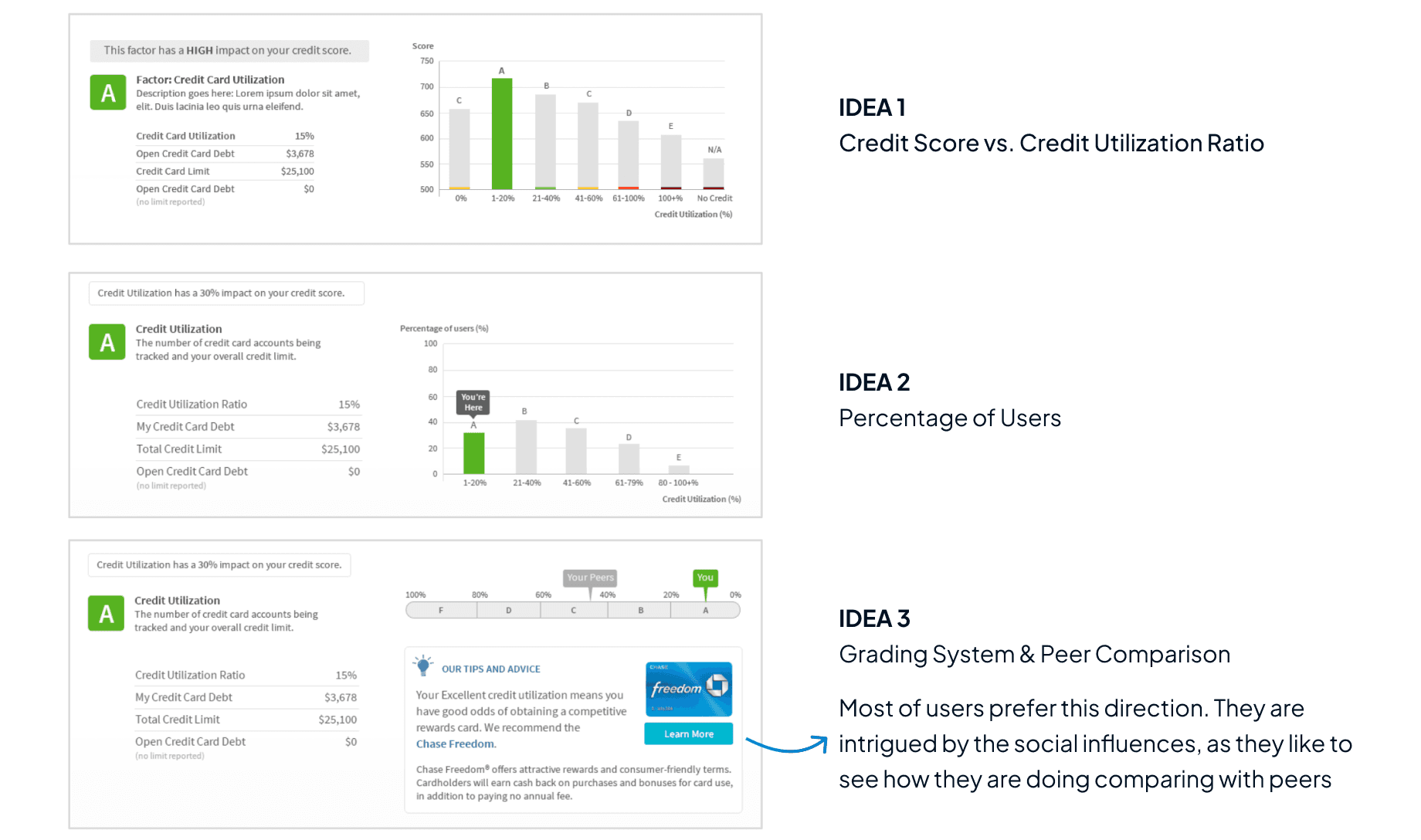
From the initial user study, we have learned that users are looking for a credit score breakdown with the detailed analysis of their score factors. Within each score factor, I created a few design iterations with different way to present the data and the grading system. We have learned that users are intrigued by the social influences, as they like to see how they are doing comparing with peers.
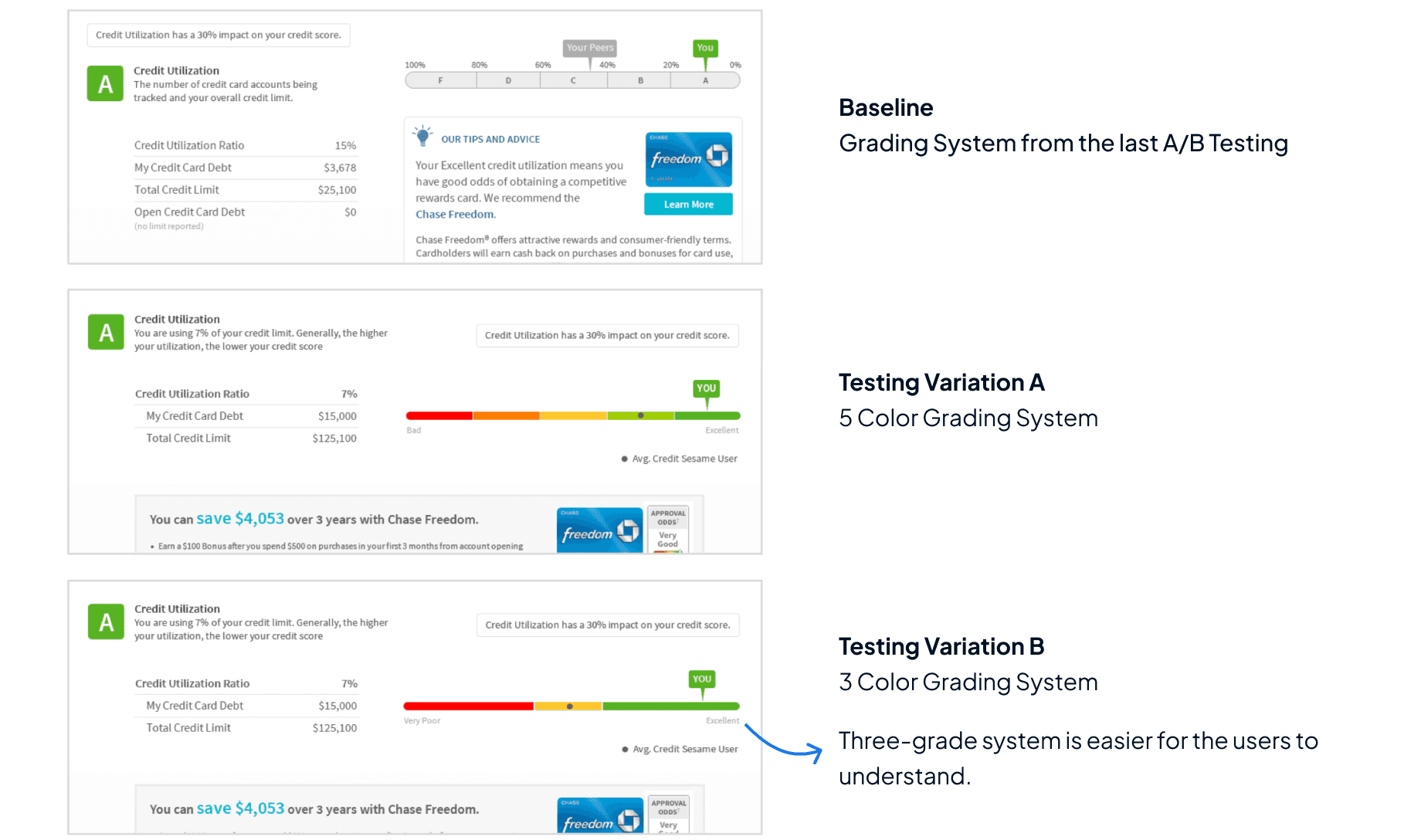
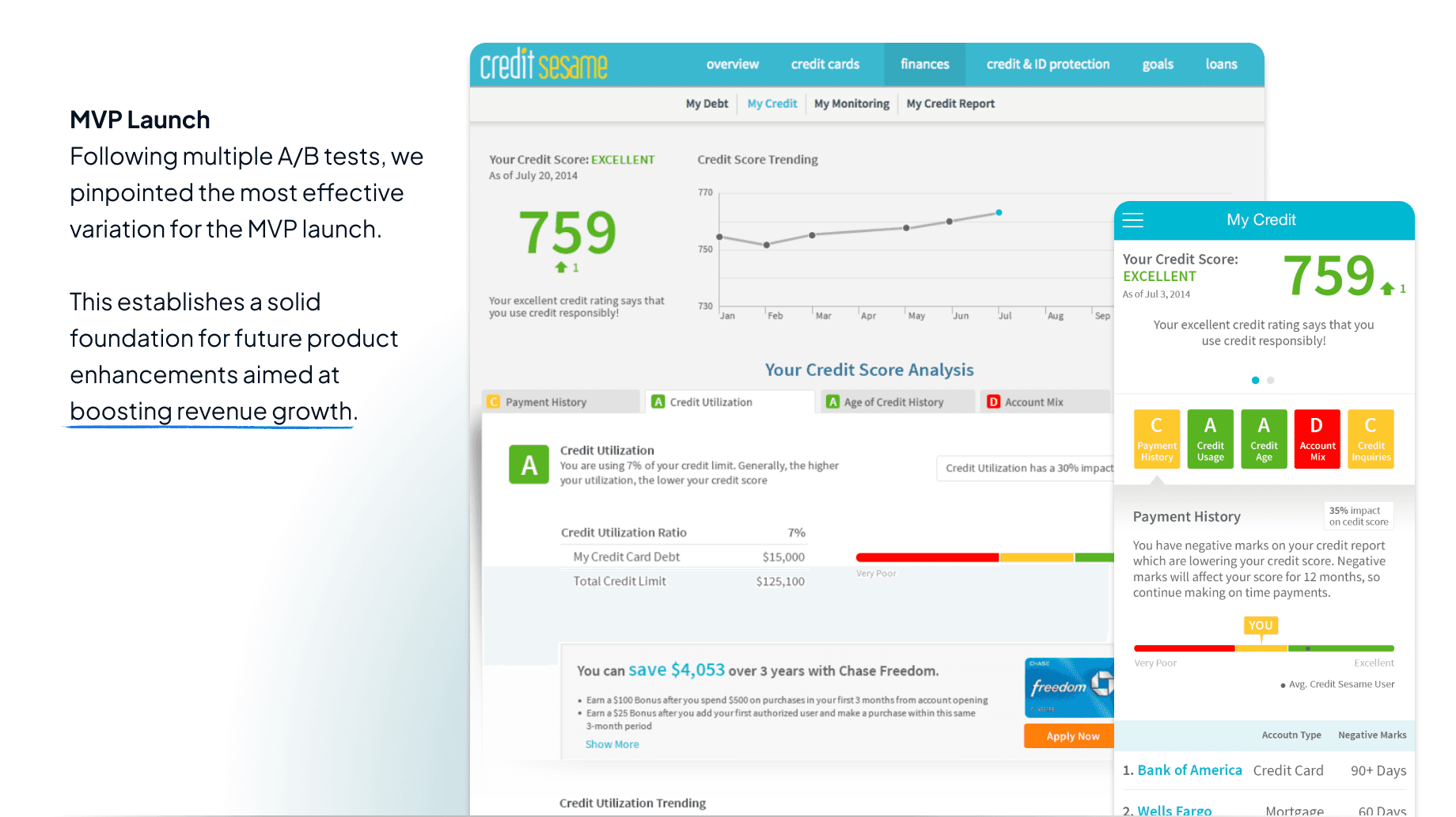
Finalized Variation for the MVP
Optimize for the Revenue Growth
In addition to enhancing the desktop web experience, it's crucial to optimize the mobile view, as a significant number of customers are using Credit Sesame on their mobile devices while on the go.
Technical Constraints
From engineering team's perspective, we were unable to provide the "average peer information", although the social influences might drive user's interest to the product based on the learnings from the user testing. Instead, we focused on what potentially boost the core value of the product, and provide meaningful action for users as well as increase company's revenue with the product offering.