Project Overview
As the lead UX designer at Presto AI, I spearheaded a complete redesign of the menu portal—a critical product tooling that impacts voice agents, AI efficiency, and restaurant operations. The existing system was built on a legacy QR code platform with fragmented workflows that hindered the Menu Operations team's productivity. My objective was to consolidate standalone modules into a unified platform while improving user efficiency.
My Role: Lead UX Designer
Timeline: 2-3 months, building the design system simultaneously
Cross-functional Teams: Product Manager, Engineering, Menu Operations
Business Impact
Operational Efficiency
Improve Operational Efficiency
Designing a portal to reduce menu editing time and eliminate the need for extensive training on unintuitive workflows. This directly supported Presto's growth from managing single-digit stores to hundreds of locations.
Operational Efficiency
Scalable Infrastructure
By creating a unified system that supports brand and franchise-level editing (rather than store-by-store management), the new portal positioned Presto to handle rapid market expansion while reducing operational overhead.
Discovery Phase: User Journey Mapping & Data Structure Visualization
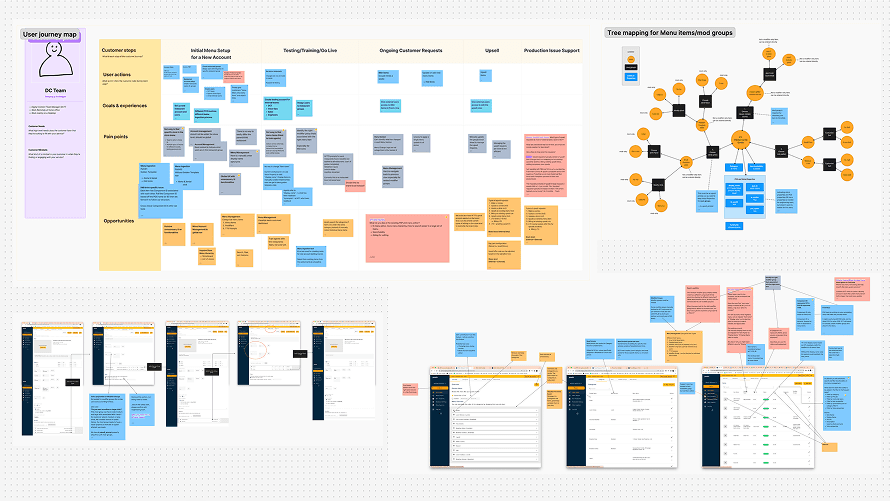
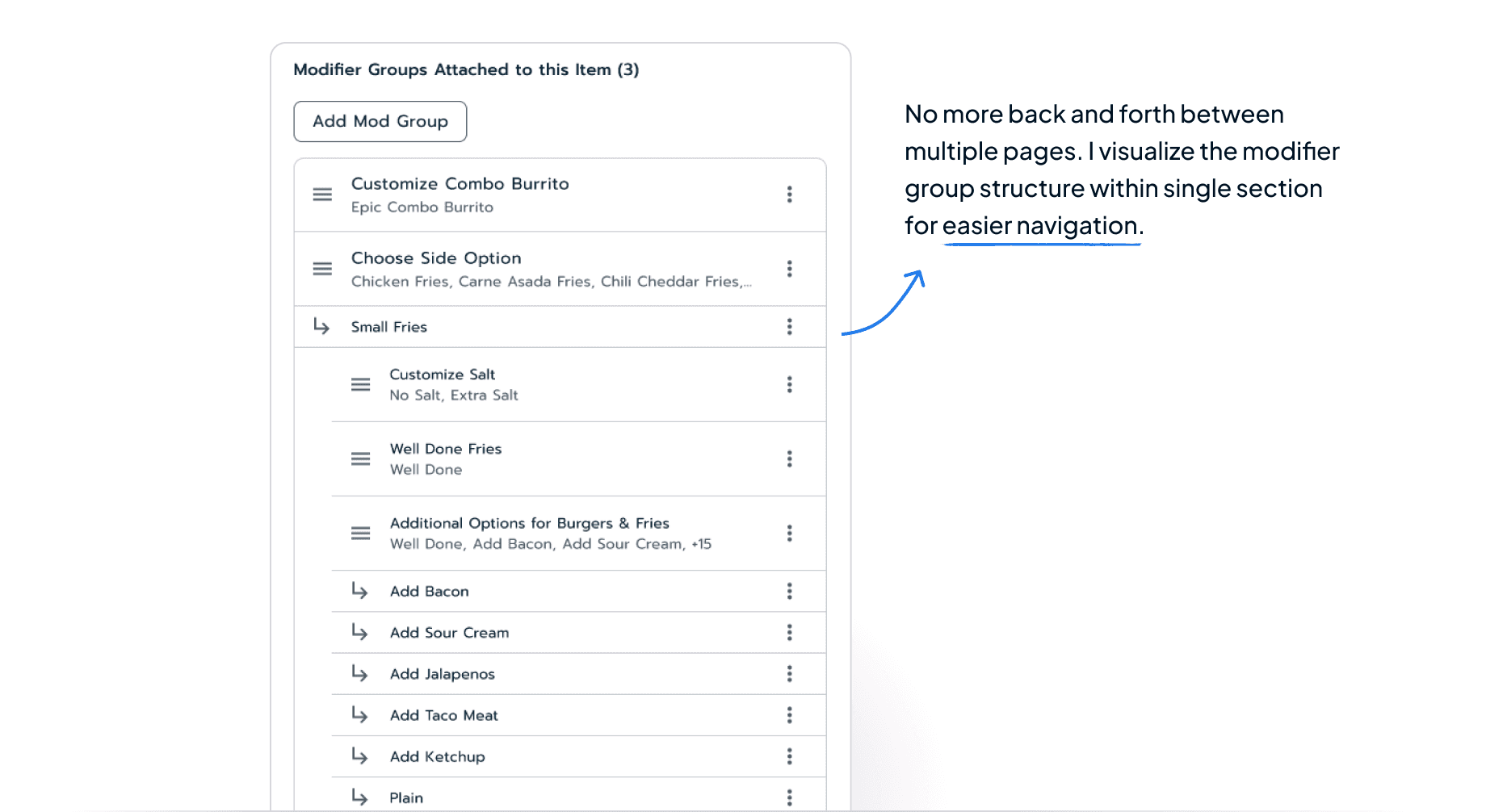
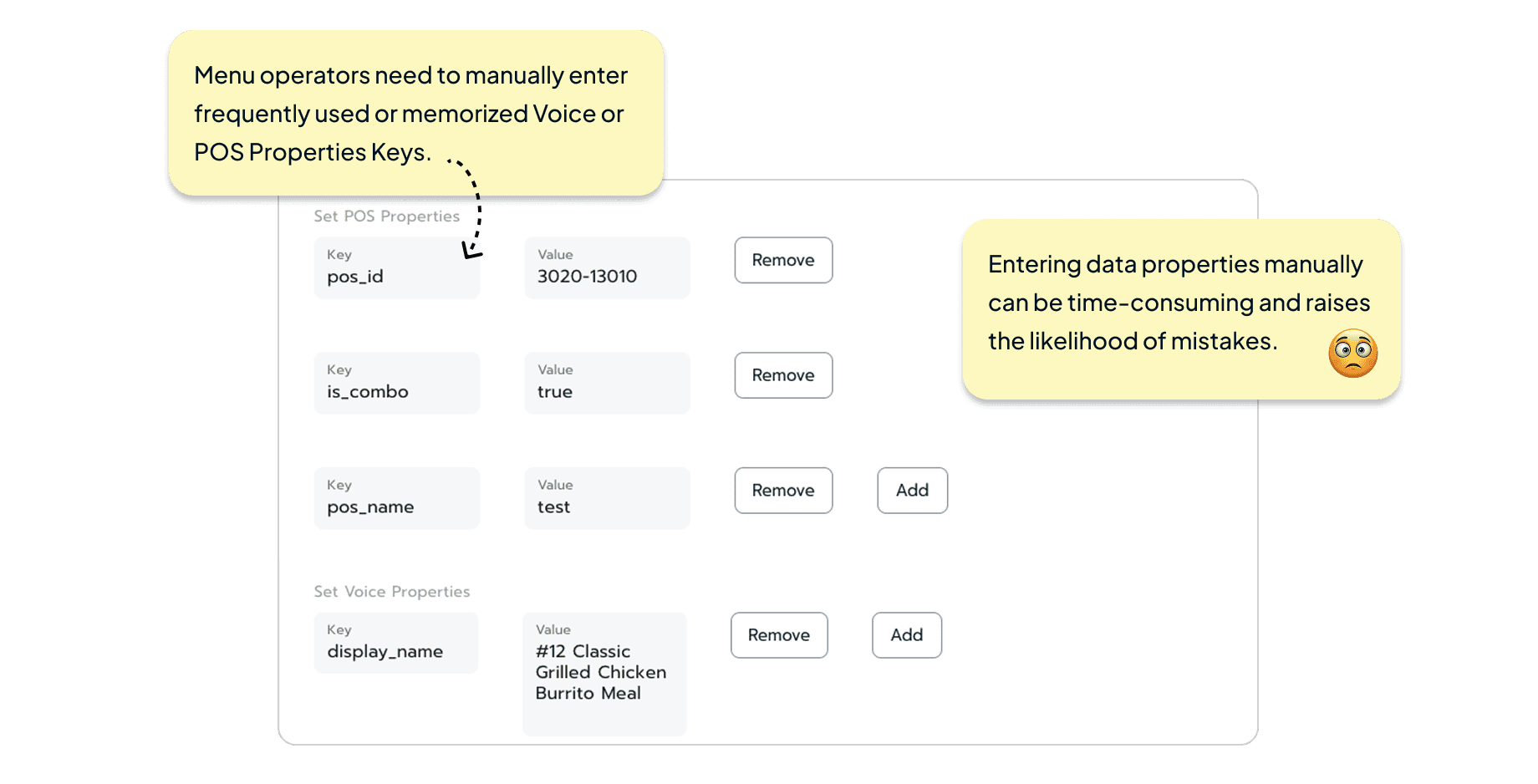
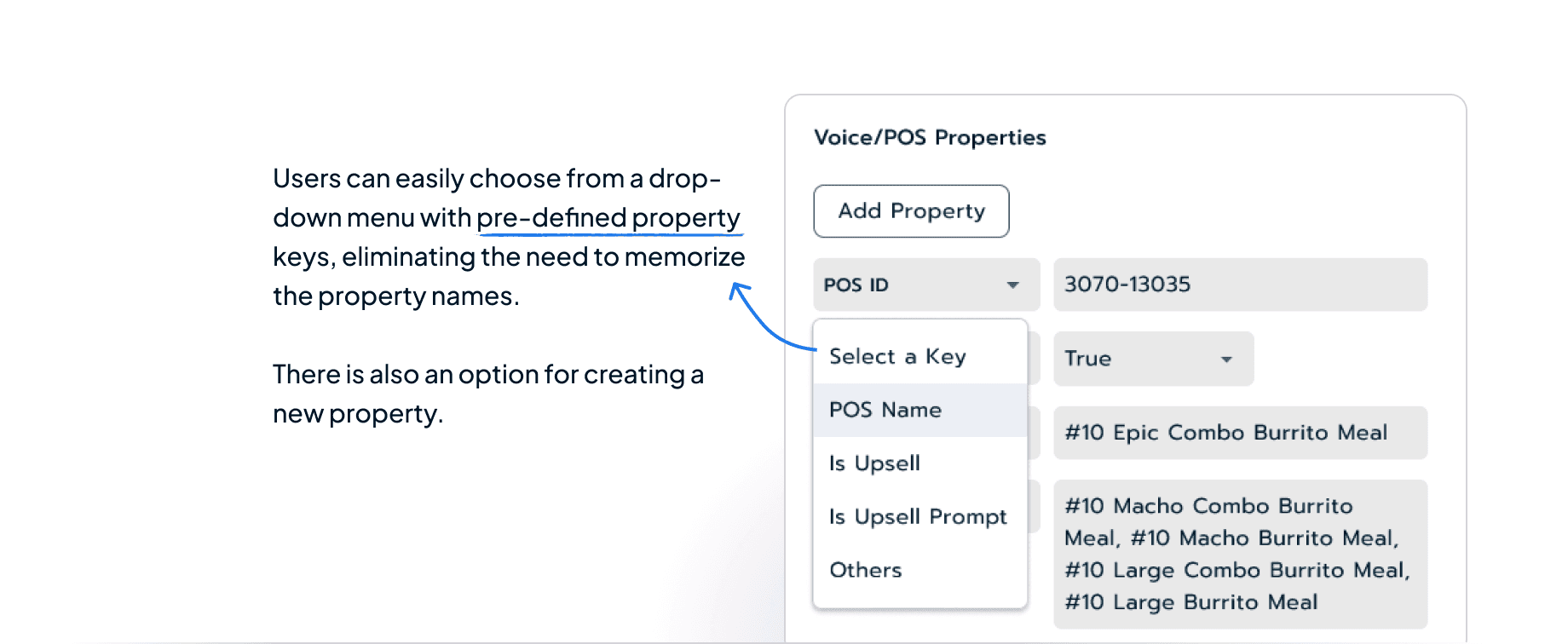
To understand Menu Operations team's daily workflows and pain points, I conducted comprehensive interviews with the team members. Through multiple rounds of journey mapping, data structure visualization and annotations, I identified three critical inefficiencies that were costing the team hours each day.
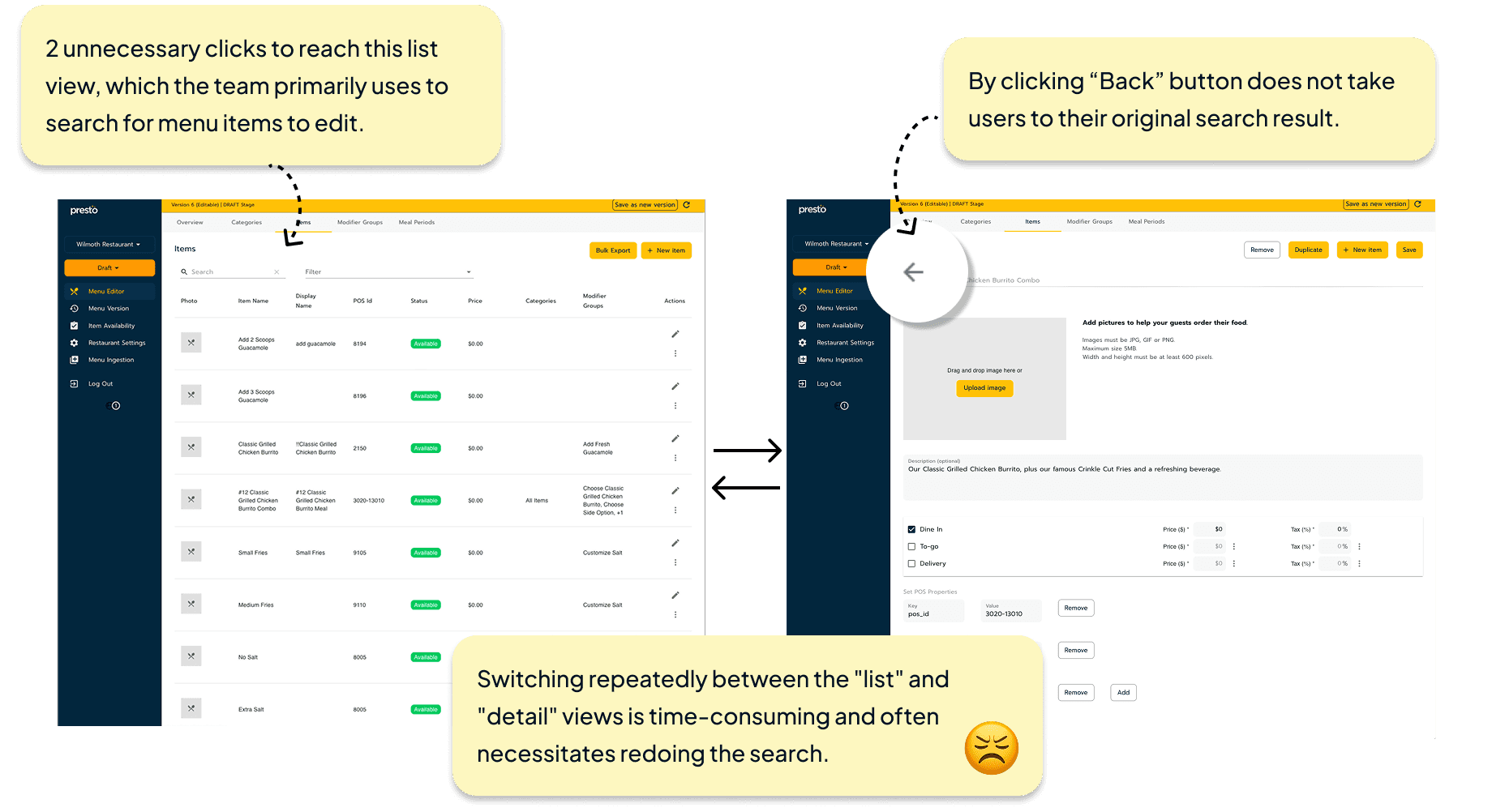
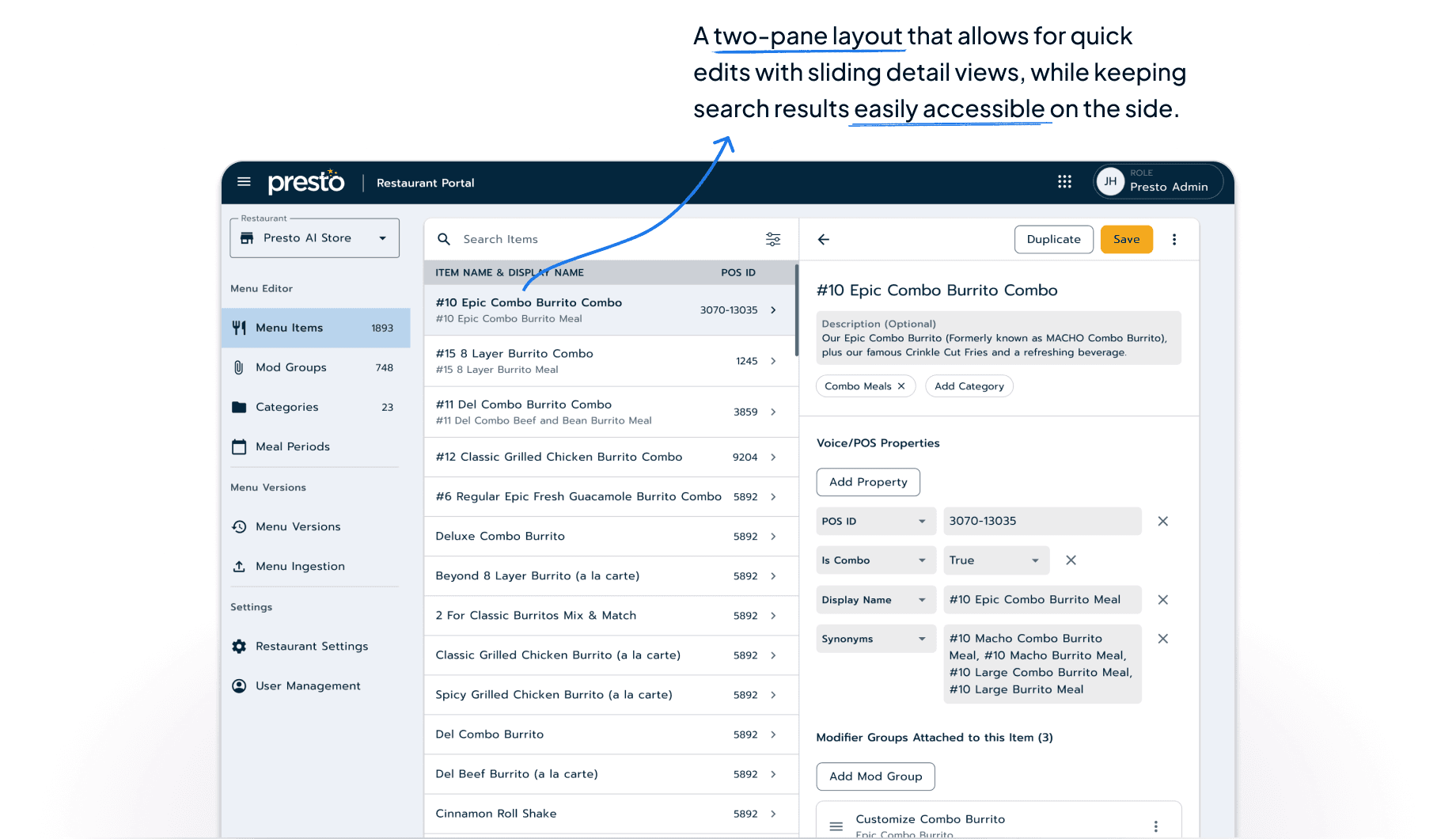
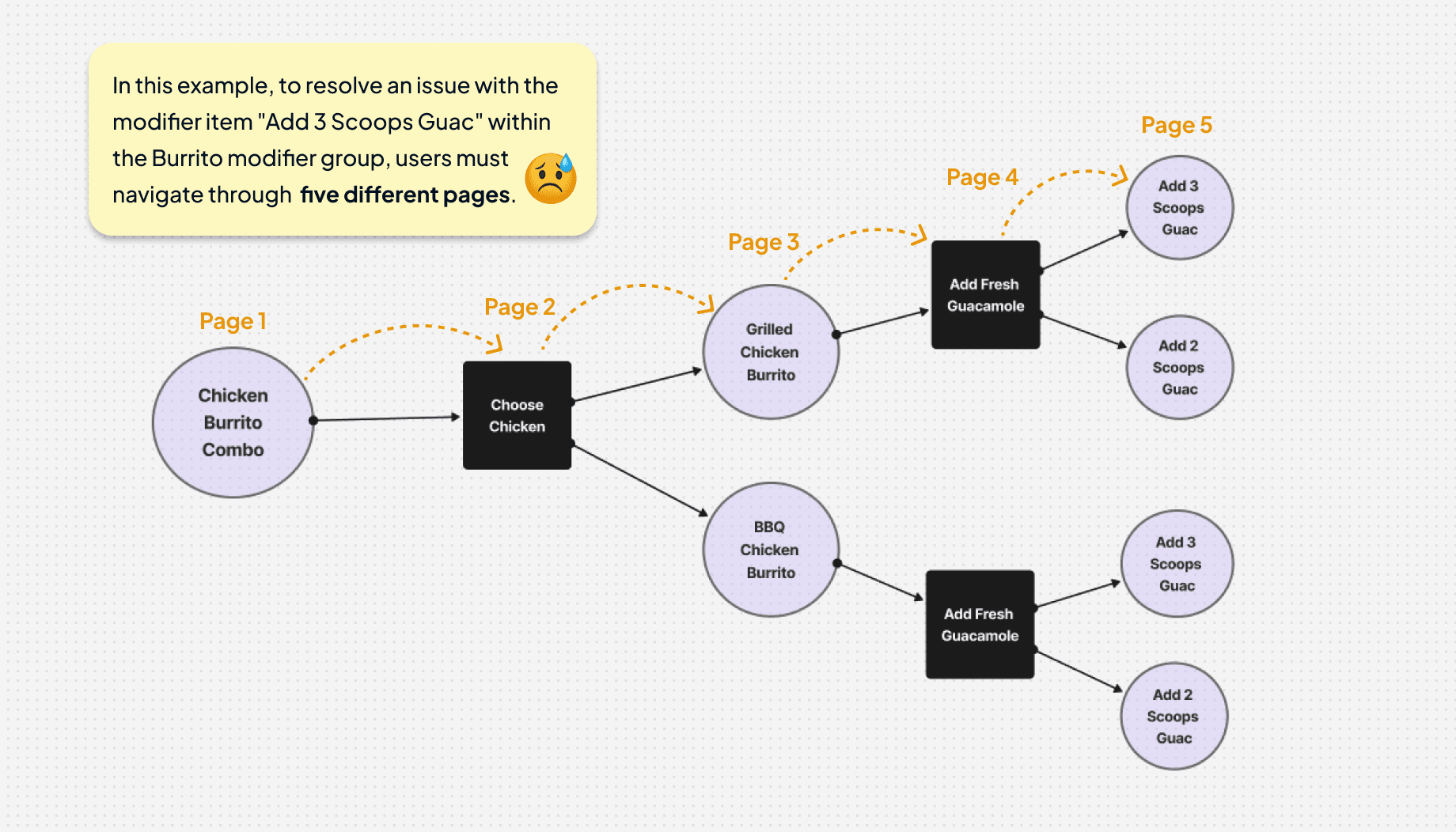
Key User Challenges and Design Solutions
Technical Strategy & Constraints
Working in a resource-constrained startup environment while managing dual product design and product management responsibilities required careful strategic navigation. Key constraints included:
Balancing Innovation and Stability:
One of my biggest challenges was redesigning core functionality while maintaining system integrity. The voice property component, for example, connects to multiple product areas including agent search, display systems, and AI readbacks. Certain features in the existing platform were engineered as a workaround to the legacy system. I worked closely with engineering to map these dependencies and ensure seamless transitions.
Resource-Conscious Prioritization:
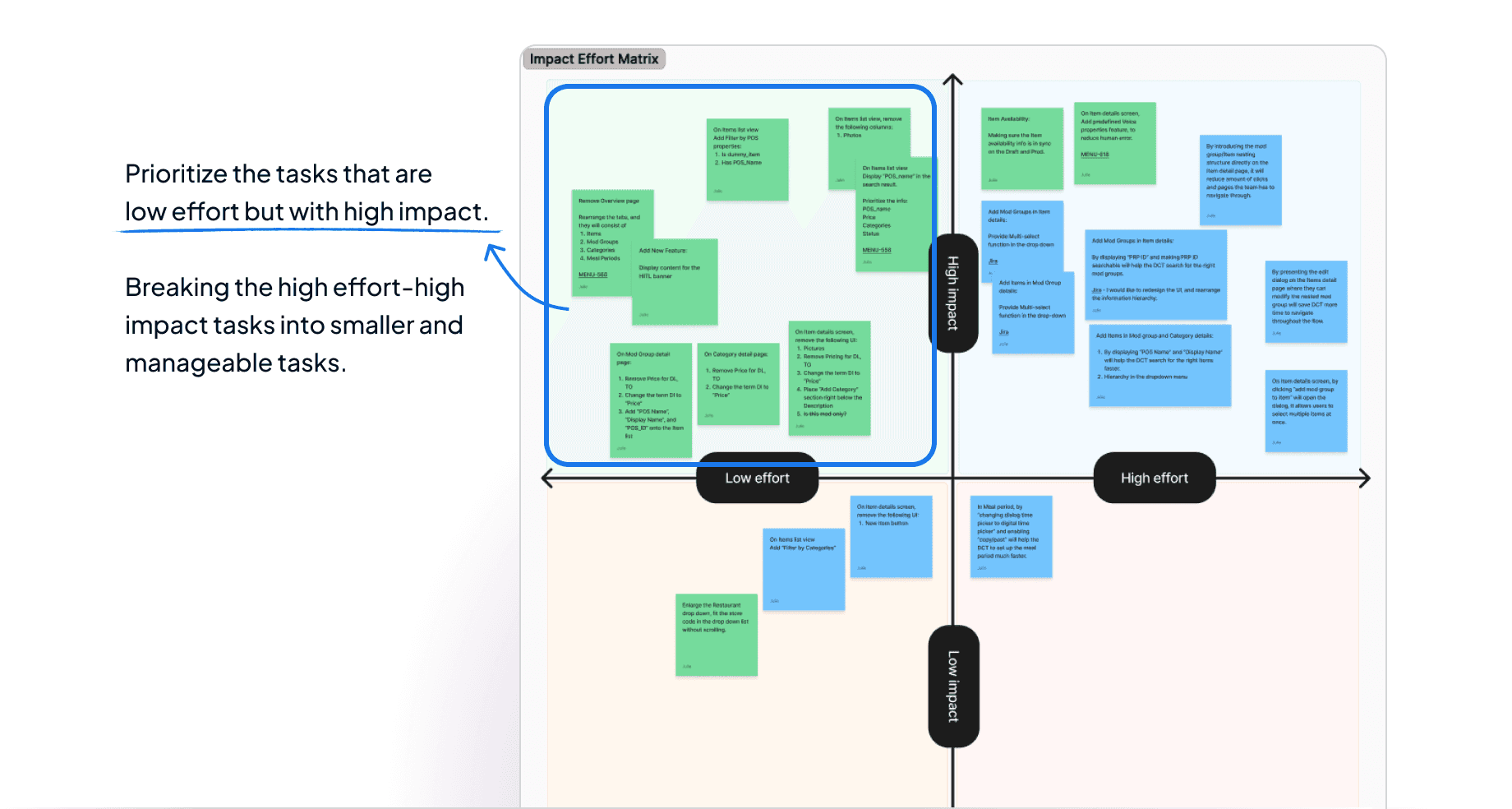
Given limited development capacity, I led an Impact/Effort workshop with the PM and Engineering lead to identify the highest-value features. This collaborative prioritization allowed us to deliver 80% of the user experience improvements within our constraints.
Future Vision: Unified Menu Management
Looking ahead, I designed the foundation for a unified menu system that enables brand and franchise-level editing—a critical capability as Presto scales from dozens to hundreds of restaurant locations. This strategic thinking demonstrates how tactical design decisions support long-term business growth.Positioned platform for franchise-level management capabilities
Key Takeaways
This project reinforced several important lessons about enterprise UX design:
Early buy-in from Product and Engineering leaders was crucial for navigating complex technical constraints while maintaining user-centered solutions.
The design process required constant balancing of user needs, technical limitations, and business priorities—skills that translate directly to any complex product environment.
By considering both immediate user needs and future scalability requirements, I created solutions that serve the business today while enabling tomorrow's growth.